
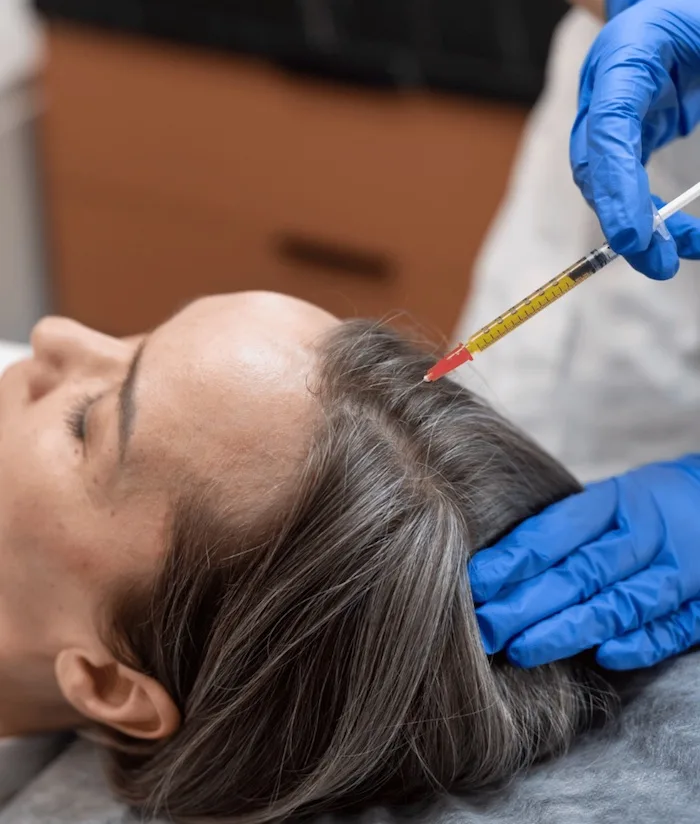
Advanced PRP Plasma Treatment
PRP plasma treatment is a minimally invasive procedure that uses a concentrated portion of a patient’s own blood to support skin and hair rejuvenation. The process involves drawing a small amount of blood, processing it to separate platelet-rich plasma, and then applying or injecting the prepared plasma into the area being treated.
PRP contains platelets and growth factors that are involved in the body’s natural healing processes. In dermatology, PRP may be used for concerns involving hair loss and skin rejuvenation, including improving the appearance of skin texture and fine lines.
A professional platelet rich plasma clinic can evaluate your concerns and determine whether PRP is appropriate for you. Treatment recommendations depend on your individual condition, treatment goals, medical history, and the area being treated.
Medical Disclaimer:
 The information provided on this page is for general educational and informational purposes only. It is not medical advice, diagnosis, or a substitute for professional medical consultation. Treatment suitability, results, risks, side effects, and recovery may vary from person to person. This content does not establish a doctor-patient relationship. Consult a qualified dermatologist or healthcare professional before undergoing treatment. Do not begin, stop, or undergo any treatment based solely on information provided on this website.
Our Doctor & Clinical Expertise
Dr. Parmvir Singh, MD, is a board-certified dermatologist and a Fellow of the American Academy of Dermatology. He personally sees every patient and provides dermatologic care for individuals with different skin types and concerns. His clinical work includes cosmetic and surgical dermatologic procedures performed in-office, supported by a patient-focused approach.
Professional PRP care begins with an evaluation of the concern being treated. A prp therapy specialist can assess your skin or scalp, discuss your treatment goals, and determine whether PRP may be appropriate for your individual needs.
Understanding PRP Plasma Treatment
PRP plasma treatment uses a patient’s own blood as the source of platelet-rich plasma. A small blood sample is collected and processed to separate the platelet-rich portion from the other components. The prepared PRP can then be administered to the targeted treatment area.
For hair-related concerns, PRP may be administered to the scalp with the goal of supporting hair follicle activity and natural hair growth. For cosmetic skin concerns, PRP may be used as part of a skin rejuvenation approach intended to improve the appearance of skin texture, tone, and fine lines.
Because PRP treatment uses the patient’s own blood components, it is different from treatments that introduce synthetic fillers or other external substances. However, individual results can vary and PRP is not appropriate for every patient or every condition.
PRP Treatments We Offer
PRP for Hair Rejuvenation
PRP may be used as part of a treatment plan for certain types of hair loss. The prepared platelet-rich plasma is administered into targeted areas of the scalp with the goal of supporting the natural hair-growth process.
PRP is not a guaranteed treatment for every type of hair loss. A professional assessment can help determine the possible cause of hair loss and whether PRP may be appropriate.
Potential risks and side effects:
 Potential side effects may include temporary pain, tenderness, redness, swelling, bruising, or sensitivity at the injection sites. Infection and other complications are possible with any injection procedure.
PRP for Skin Rejuvenation
PRP may also be used for cosmetic skin rejuvenation. The treatment may support the appearance of skin texture, tone, and fine lines by utilizing the growth factors present in platelet-rich plasma.
A personalized treatment plan can be developed according to your skin condition and cosmetic goals. PRP may be used alone or considered alongside other appropriate cosmetic treatments.
Potential risks and side effects:
 Potential side effects may include temporary redness, swelling, bruising, tenderness, discomfort, or irritation at the treatment area. Rare complications such as infection or prolonged inflammation may occur.
PRP for Facial Rejuvenation
PRP can be used as part of a facial rejuvenation approach for individuals interested in improving the appearance of fine lines, skin texture, and overall skin quality. The treatment uses the patient’s own platelet-rich plasma rather than a synthetic filler.
The suitability of PRP for facial rejuvenation depends on your skin condition and individual goals. A professional consultation can help determine whether this treatment is appropriate.
Potential risks and side effects:
 Potential risks may include temporary swelling, redness, bruising, tenderness, discomfort, and sensitivity. Injection-related complications such as infection are possible but uncommon.
Why Choose Professional PRP Plasma Treatment?
Choosing professional PRP plasma treatment allows your skin or scalp concern to be evaluated before treatment. This is important because hair loss and skin concerns can have different causes and may require different treatment approaches.
A professional platelet rich plasma clinic can discuss the procedure, expected benefits, potential limitations, and possible risks before treatment. Your provider can also explain whether PRP may be used alone or as part of a broader treatment plan.
What Is PRP Plasma Treatment?
PRP plasma treatment is a procedure that uses platelet-rich plasma prepared from the patient’s own blood. After a blood sample is collected and processed, the platelet-rich portion is separated and administered to the selected treatment area.
The growth factors present in platelets are involved in natural tissue repair and regeneration. In dermatology, PRP may be used for hair and skin rejuvenation.
What Does a PRP Therapy Specialist Do?
A prp therapy specialist evaluates the area being treated and considers your medical history, skin or scalp condition, and treatment goals before recommending PRP.
The provider explains how the blood sample is collected, how the PRP is prepared, how it will be administered, and what you may experience during recovery.
A prp therapy specialist can also discuss realistic expectations and whether other treatments may be more appropriate for your specific concern.
Benefits of Professional PRP Plasma Treatment
Uses Your Own Platelet-Rich Plasma
PRP is prepared from a patient’s own blood, making it different from treatments that use synthetic injectable substances.
Supports Skin Rejuvenation
PRP may help improve the appearance of skin texture, tone, and fine lines as part of a personalized skin rejuvenation plan.
May Support Hair Growth
PRP may be considered for certain types of hair loss and can be used to support the natural hair-growth process. Results vary depending on the cause and extent of hair loss.
Minimally Invasive Approach
PRP involves blood collection and targeted injections rather than an invasive surgical procedure. Some temporary discomfort or bruising may occur following treatment.
Personalized Treatment Planning
A platelet rich plasma clinic can assess your individual concerns and determine whether PRP is appropriate based on your skin or scalp condition and treatment goals.
What Makes Professional PRP Care Different?
Professional PRP care combines appropriate patient evaluation, careful preparation of platelet-rich plasma, and targeted treatment. The procedure should be selected according to the concern being addressed rather than used as a universal treatment.
A qualified prp therapy specialist can determine whether your concern may benefit from PRP and discuss realistic expectations before treatment.
Begin Your PRP Treatment Journey With a Consultation
Before scheduling PRP plasma treatment, discuss your concerns and treatment goals with a qualified professional. A consultation allows your skin or scalp to be evaluated and helps determine whether PRP is appropriate.
During your consultation, your provider can explain the treatment process, potential benefits, risks, expected recovery, and whether additional or alternative treatments may be considered.
Long-Term Skin and Hair Care Through Personalized Treatment
PRP results can vary depending on the individual, the condition being treated, and other factors. For hair-related concerns, visible changes may take time because hair growth occurs gradually.
For skin rejuvenation, improvement in texture and appearance may also develop over time. Your provider can recommend appropriate follow-up based on your treatment goals and response.
Trusted PRP Plasma Treatment
Professional PRP plasma treatment focuses on careful evaluation, appropriate treatment planning, and individualized care. PRP may be considered for selected hair and skin rejuvenation concerns, but it is not appropriate for every condition.
A qualified platelet rich plasma clinic can help you understand the potential benefits, limitations, and risks before deciding whether PRP is suitable for you.
Ready to Explore PRP Treatment?
If you are considering PRP for hair or skin rejuvenation, schedule a consultation with a qualified dermatologist or prp therapy specialist. Your condition can be evaluated and an individualized treatment plan can be discussed.
Frequently Asked Questions
What is PRP plasma treatment?
PRP plasma treatment is a procedure that uses platelet-rich plasma prepared from a patient’s own blood. A small blood sample is processed to separate the platelet-rich portion, which is then administered to the targeted treatment area.
What is plasma rich therapy?
Plasma rich therapy refers to treatment using platelet-rich plasma obtained from the patient’s own blood. PRP contains platelets and growth factors that are involved in natural healing and tissue repair.
Can PRP help with hair loss?
PRP may support hair regrowth for certain types of hair loss by targeting the scalp and supporting hair follicles. However, results vary and PRP is not appropriate for every cause of hair loss.
Can PRP improve skin?
PRP may be used for skin rejuvenation and may help improve the appearance of fine lines, skin texture, and tone.
How does PRP treatment work?
A small amount of blood is drawn and processed to separate platelet-rich plasma. The prepared plasma is then administered to the targeted area, such as the scalp or skin.
Is PRP a surgical treatment?
PRP is a minimally invasive procedure rather than a surgical operation. It involves blood collection and targeted injections.
How long does PRP treatment take?
The appointment length can vary depending on the treatment area and the specific PRP procedure being performed. Your provider can explain the expected appointment time during your consultation.
How many PRP treatments will I need?
The appropriate number and frequency of treatments depend on the condition being treated, individual response, and treatment goals. A prp therapy specialist can recommend a treatment schedule after evaluating your condition.
Is PRP safe?
PRP uses platelet-rich plasma prepared from the patient’s own blood, but the procedure can still have risks associated with blood collection and injections. Possible effects include temporary pain, redness, swelling, bruising, or tenderness.
Why should I choose a platelet rich plasma clinic?
A professional platelet rich plasma clinic can evaluate your condition before treatment and determine whether PRP is appropriate. Professional care also allows the procedure, potential risks, and expected results to be discussed before treatment.
What does a PRP therapy specialist do?
A prp therapy specialist assesses the patient’s skin or scalp, discusses treatment goals, determines whether PRP may be appropriate, and explains the procedure and aftercare.
Potential risks and side effects:
 Potential side effects of PRP may include temporary pain, tenderness, redness, swelling, bruising, or sensitivity at the treatment site. Because PRP involves blood collection and injections, infection and other procedural complications are possible.
Medical Disclaimer:
 This page provides general information about PRP and is not intended to provide medical advice, diagnosis, or treatment. Individual treatment suitability, results, risks, and recovery may vary. Consult a qualified dermatologist or healthcare professional for personalized guidance before undergoing PRP or any other medical procedure.