
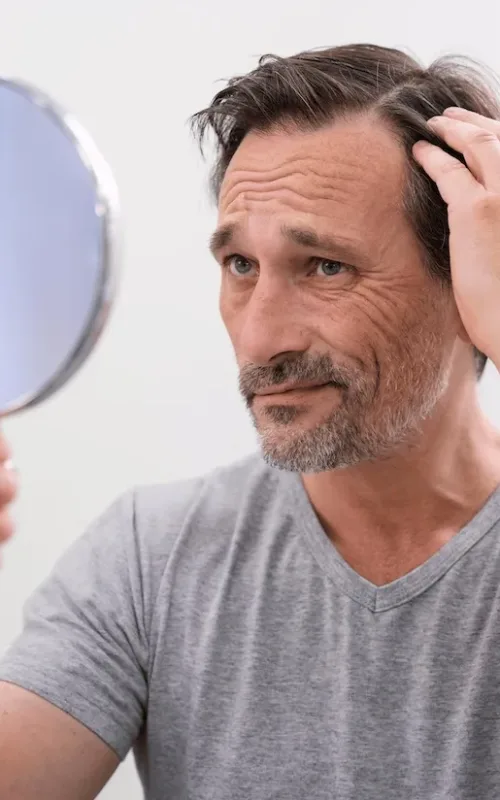
Advanced Hair Loss Treatment
Hair loss, particularly androgenic hair loss, can affect both men and women and may lead to thinning hair, receding hairlines, and bald spots. Genetics, hormonal changes, and aging are common factors associated with this condition. For many people, changes in hair density can also affect confidence and self-esteem.
Consulting a board certified dermatologist for hair loss can help you understand the possible causes of thinning and explore treatment options suited to your concerns. A professional evaluation helps determine the extent and pattern of hair loss and whether prescription medications, topical compounds, nutritional support, or platelet-rich plasma (PRP) therapy may be appropriate.
Our approach to hair loss care focuses on medically guided treatment options for androgenic hair loss. These may include prescription oral and topical medications, nutraceuticals such as Nutrafol, customized prescription-strength topical compounds, and PRP therapy. Each option serves a different purpose, and recommendations depend on your medical history, hair loss pattern, and individual goals.
Medical Disclaimer: The information provided on this page is intended for general educational purposes only. It is not medical advice, diagnosis, or a substitute for professional medical consultation and does not establish a doctor-patient relationship. Hair loss causes, treatment suitability, results, risks, and side effects vary between individuals. Prescription medications should only be used under appropriate medical supervision. Consult a qualified dermatologist or healthcare professional before starting, stopping, or changing any treatment.Our Doctor & Clinical Expertise
Dr. Parmvir Singh, MD, is a board-certified dermatologist and Fellow of the American Academy of Dermatology (AAD). He personally sees every patient and provides dermatological care based on individual concerns, skin and scalp conditions, medical history, and treatment goals.
With experience in medical and cosmetic dermatology, Dr. Singh takes a patient-focused approach to evaluating hair loss concerns and discussing appropriate treatment options. For patients experiencing androgenic hair loss, professional guidance can help determine whether prescription medications, topical formulations, nutritional supplements, or PRP therapy may be suitable.
Consulting a board certified dermatologist for hair loss allows patients to discuss their hair loss patterns, treatment expectations, and available options. The goal is to recommend an approach that considers each patient’s needs rather than relying on a one-size-fits-all solution.
Hair Loss Treatments We Offer
Hair loss treatment options vary depending on the type and extent of hair thinning, medical history, and individual response. Our treatment approach includes prescription medications, nutraceuticals, customized topical compounds, and PRP therapy.
Prescription Oral and Topical Medications
Prescription medications may be recommended to help manage certain forms of hair loss, including androgenic hair loss. Depending on the patient’s condition and medical suitability, treatment options may include finasteride, spironolactone, minoxidil, and dutasteride.
These medications work through different mechanisms. Some help address hormonal factors associated with pattern hair loss, while others support hair growth or influence the hair growth cycle. The appropriate medication, formulation, and treatment schedule depend on the individual’s needs.
Your dermatologist will review your medical history, current medications, potential contraindications, and treatment goals before recommending a prescription option.
Potential risks and side effects: Side effects depend on the medication prescribed. Finasteride and dutasteride may cause sexual side effects, breast tenderness, or mood-related changes. Spironolactone may cause dizziness, menstrual changes, breast tenderness, and changes in potassium levels. Minoxidil may cause scalp irritation when used topically, while oral minoxidil can cause unwanted hair growth, fluid retention, dizziness, or changes in heart rate and blood pressure. Some medications have important pregnancy-related precautions. Discuss medication-specific risks and monitoring requirements with your prescribing provider.Nutraceuticals Such as Nutrafol
Nutraceuticals are nutritional supplements that may be considered as part of a broader hair care plan. Nutrafol is one example of a supplement formulated to support hair health.
Nutritional support may be discussed when evaluating factors that could contribute to hair concerns. However, supplements do not replace medical treatment for an underlying hair loss condition, and their benefits may vary depending on individual needs and nutritional status.
A dermatologist can help determine whether a nutraceutical is appropriate and whether it may interact with medications or other supplements you currently use.
Potential risks and side effects: Nutraceuticals may cause digestive discomfort, allergic reactions, or interactions with medications. Ingredients and formulations vary, so patients should review the product label and discuss its suitability with a healthcare professional, particularly if they have existing medical conditions or take prescription medications.Customized Prescription-Strength Topical Compounds
Customized topical compounds may combine prescription-strength ingredients to address specific hair loss concerns. Depending on the patient’s evaluation, formulations may include minoxidil, finasteride, spironolactone, or latanoprost.
These topical preparations are designed to deliver selected ingredients directly to the scalp. The formulation and concentration depend on the patient’s needs and the prescribing provider’s recommendation.
A hair loss treatment doctor can determine whether a customized topical compound may be suitable and explain how to use it, what results to expect, and what precautions are necessary.
Potential risks and side effects: Possible effects include scalp irritation, redness, itching, dryness, flaking, and contact dermatitis. Some ingredients may also be absorbed through the skin and cause systemic side effects. The risks depend on the ingredients, concentration, application area, and individual sensitivity. Use customized prescription compounds only as directed by your healthcare provider.Platelet-Rich Plasma (PRP) Therapy
Platelet-rich plasma (PRP) therapy uses a concentrated portion of the patient’s own blood that contains platelets and growth factors. The blood is processed to prepare the platelet-rich portion, which is then injected into targeted areas of the scalp.
PRP may be considered for selected patients experiencing androgenic hair loss. The treatment aims to support hair follicle activity and may help improve hair density in some individuals. The number of sessions and potential results depend on the patient’s condition and response to treatment.
Potential risks and side effects: Temporary scalp tenderness, redness, swelling, bruising, and discomfort may occur. Infection, bleeding, and other injection-related complications are possible, although uncommon when appropriate procedures are followed. Results vary, and improvement is not guaranteed.Why Choose a Board Certified Dermatologist for Hair Loss?
Hair loss can have different patterns and causes, so choosing a qualified dermatologist is an important step toward understanding your options. A board certified dermatologist for hair loss can evaluate your concerns, discuss suitable medical and cosmetic treatments, and help you understand what each approach can realistically achieve.
Professional guidance can help you:
- Understand your hair loss pattern and possible contributing factors.
- Explore prescription medications and topical treatment options.
- Discuss nutraceuticals and customized prescription-strength formulations.
- Understand whether PRP therapy may be suitable.
- Review potential benefits, limitations, side effects, and treatment expectations.
- Receive recommendations based on your medical history and individual needs.
Working with an experienced dermatologist also helps ensure that treatment decisions are based on an appropriate evaluation rather than assumptions about the cause of hair thinning.
What Is Androgenic Hair Loss?
Androgenic hair loss, also known as male or female pattern hair loss, is a common form of hair loss associated with genetics, hormonal factors, and aging. It can affect both men and women, often causing gradual thinning, a receding hairline, or bald spots.
The condition develops as hair follicles become progressively smaller, resulting in thinner hair and changes in the normal hair growth cycle. The pattern and extent of hair loss can differ from person to person.
A doctor for hair loss can assess your concerns, review your medical history, and discuss whether prescription medications, topical compounds, nutritional support, or PRP therapy may help address your condition.
What Does a Hair Loss Treatment Doctor Do?
A hair loss treatment doctor evaluates concerns related to thinning hair, receding hairlines, and pattern baldness. The assessment helps determine the possible cause and extent of hair loss and whether available treatment options may be appropriate.
Depending on your concerns, a consultation may involve:
- Reviewing your hair loss history, medical background, and treatment goals.
- Evaluating the pattern and extent of thinning.
- Discussing prescription medications such as finasteride, spironolactone, minoxidil, and dutasteride.
- Reviewing nutraceutical options such as Nutrafol.
- Considering customized prescription-strength topical compounds.
- Assessing whether PRP therapy may be appropriate.
- Explaining expected results, possible side effects, and follow-up requirements.
A hair loss specialist dermatologist can help you understand the differences between treatment options and make an informed decision based on your individual needs.
Benefits of Professional Hair Loss Treatment
Personalized Treatment Recommendations
Every person’s hair loss pattern, medical history, and treatment goals are different. Professional evaluation helps identify suitable options based on the extent of thinning, possible contributing factors, and individual treatment needs.
Access to Medical and Topical Treatment Options
Prescription oral and topical medications, customized formulations, and nutraceuticals provide different approaches to managing hair loss. A dermatologist can help determine which options may be suitable for your condition.
Support for Hair Growth and Density
Depending on the selected approach and individual response, treatment may help support hair growth, improve hair density, or manage ongoing thinning. Results vary, and no treatment can guarantee the same outcome for everyone.
PRP Therapy as a Treatment Option
PRP therapy may be considered for selected patients experiencing androgenic hair loss. A professional assessment helps determine whether this procedure may be a suitable addition to an individualized treatment plan.
Professional Guidance Throughout Treatment
A qualified provider can explain what to expect before, during, and after treatment. This includes discussing medication use, possible side effects, monitoring, follow-up appointments, and realistic expectations.
What Makes Dermatology Treatment for Hair Loss Different?
Dermatology treatment for hair loss focuses on evaluating the patient’s scalp, hair loss pattern, medical history, and possible contributing factors before recommending treatment.
Rather than suggesting the same medication or procedure to everyone, a dermatologist considers the individual’s condition, treatment goals, and suitability for available options.
For androgenic hair loss, treatment discussions may include prescription medications such as finasteride, spironolactone, minoxidil, and dutasteride; nutraceuticals such as Nutrafol; customized prescription-strength topical compounds; and PRP therapy.
A dermatology-based approach also helps patients understand the potential benefits, limitations, side effects, and monitoring requirements associated with each option. Treatment response varies, and consistent professional guidance is important when managing ongoing hair loss.
Begin Your Hair Loss Treatment With a Consultation
A consultation is the first step toward understanding your hair loss concerns and exploring appropriate treatment options. During your appointment, you can discuss when you noticed thinning, which areas are affected, your medical history, and what kind of improvement you hope to achieve.
A board certified dermatologist for hair loss can evaluate your concerns and explain whether prescription medications, nutraceuticals, customized topical compounds, or PRP therapy may be suitable.
You can also discuss expected results, treatment limitations, possible side effects, and the overall process before deciding how to proceed.
Long-Term Hair Improvement Through Personalized Care
Managing androgenic hair loss often involves understanding the gradual nature of hair thinning and choosing an approach that aligns with your long-term goals. Prescription medications and topical compounds may require consistent use, while PRP therapy may involve a series of sessions and follow-up assessments.
Treatment response varies depending on the selected approach, the underlying cause of hair loss, and individual factors. Follow-up guidance can help your dermatologist assess progress, review tolerance to treatment, and determine whether adjustments are appropriate.
Maintaining realistic expectations and following professional recommendations are important parts of making informed decisions about hair health.
Trusted Hair Loss Care
Choosing an experienced hair loss specialist dermatologist gives you an opportunity to discuss your concerns and understand the medical and cosmetic treatments available for androgenic hair loss.
Professional care focuses on evaluating your individual needs, explaining available approaches, and helping you understand their potential benefits and limitations. Whether you are considering prescription medications, customized topical formulations, nutraceuticals, or PRP therapy, an informed treatment decision begins with a proper consultation.
Ready to Take the Next Step Toward Healthier Hair?
Hair thinning and pattern baldness can affect how you feel about your appearance, but understanding your treatment options is a positive first step.
Schedule a consultation with Dr. Parmvir Singh to discuss your hair loss concerns, review your medical history, and explore suitable treatment options. Get professional guidance about prescription medications, customized topical compounds, Nutrafol, and PRP therapy based on your individual needs.
Take the next step toward addressing unwanted hair thinning with a treatment plan guided by a qualified dermatologist.
Frequently Asked Questions
Can dermatologists help with hair loss?
Yes. Dermatologists can evaluate hair and scalp concerns, identify possible patterns and causes of hair loss, and discuss suitable treatment options. Depending on the individual’s condition, these may include prescription medications, customized topical compounds, nutraceuticals such as Nutrafol, and PRP therapy. A hair loss specialist dermatologist can help determine which options may be appropriate for your concerns.
Is hair loss treatment covered by insurance?
Insurance coverage depends on your health plan, the reason for treatment, and the services being considered. Some plans may cover medically necessary consultations or evaluations, while cosmetic procedures and certain hair restoration treatments may be excluded. Contact your insurance provider to confirm your benefits, coverage requirements, and potential out-of-pocket costs before scheduling treatment.
Does insurance cover hair loss treatment?
Not all hair loss treatments are covered by insurance. Coverage may depend on whether the treatment is considered medically necessary or cosmetic. Prescription medications, supplements, compounded topical products, and PRP therapy may have different coverage requirements. Policies vary, so check directly with your insurance provider and the clinic to understand your specific coverage.
What causes androgenic hair loss?
Androgenic hair loss is commonly associated with genetics, hormonal factors, and aging. It affects both men and women and may cause gradual thinning, receding hairlines, and bald spots. A professional assessment can help evaluate the pattern of hair loss and discuss suitable treatment options.
What treatments are available for androgenic hair loss?
Treatment options may include prescription oral and topical medications such as finasteride, spironolactone, minoxidil, and dutasteride. Nutraceuticals such as Nutrafol may also be considered. Customized prescription-strength topical compounds may contain minoxidil, finasteride, spironolactone, or latanoprost. PRP therapy is another option for selected patients. The appropriate treatment depends on individual medical history, hair loss pattern, and treatment goals.
How long does it take to see results from hair loss treatment?
The timeline depends on the treatment selected and the individual’s response. Prescription medications and topical compounds may require several months of consistent use before changes become noticeable. PRP therapy may require multiple sessions before improvement can be assessed. Your dermatologist can explain the expected timeline and follow-up schedule for your recommended treatment.
Potential risks and side effects: Hair loss treatments have different potential risks depending on the method used. Prescription medications may cause medication-specific side effects and require medical supervision. Nutraceuticals may cause digestive discomfort, allergic reactions, or interactions with other products. Customized topical compounds may cause scalp irritation, redness, dryness, or other ingredient-related effects. PRP therapy may cause temporary tenderness, bruising, redness, swelling, or discomfort at injection sites. Discuss the risks, precautions, and expected outcomes of your treatment with a qualified healthcare professional.
Medical Disclaimer: This page is intended for general educational purposes only and does not constitute medical advice, diagnosis, or a substitute for professional consultation. It does not establish a doctor-patient relationship. Hair loss conditions, treatment suitability, results, risks, and recovery vary between individuals. Prescription medications and customized compounds should only be used under appropriate medical supervision. Consult a qualified dermatologist or healthcare professional for an individualized assessment before undergoing treatment. Do not make medical decisions based solely on the information provided here.